For many years, I had been in favour of the Primera Z1 small optical disc printer. When Primera discontinued this several years ago, I was not pleased and purchased two as spares, hoping at least the ribbons would continue.
It appears that I am not alone in thinking this is a good product as it has resurfaced as the U-Print CDP78, now in black, and available from many online distributors. The cartridges appear to be interchangeable with the Primera. I can now suggest that this is a good alternative for safe, long-lasting, and reasonably attractive text labeling of CDs and DVDs. It appears that the Teac P11 is also similar. The last time I checked, the Casio required manual rotation of the disk, rather than the Primera’s automatic rotation.
Please provide me with any feedback pro or con—preferably as comments to this post.
The question of how to format hard disks (i.e. what file system to use on them) for easy interchange is another FAQ. A recent experience brought home the fact that it is more complex than one might hope. The computer industry is headed towards universal readability, but it is not there yet. The most-able-to-be-read-and-written format appears to be FAT32, although my friend Eric Jacobs makes the point that NTFS is a more robust hard disk file system, and I have to agree. (more…)
I received the following in an email from a person only identified as Ross. I thank him. He sent me the following in reference to this post. concerning Philips and PoziDriv screws as used on Nakamichi Dragons and other Japanese equipment. I, too, have a set of Hozen drivers which I obtained from www.escience.ca (more…)
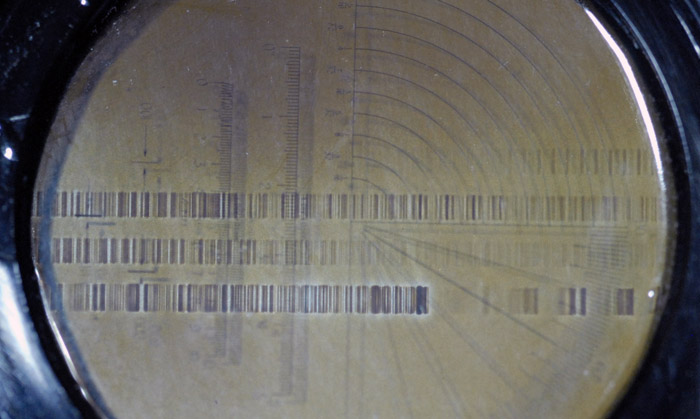
I first wrote about seeing the tracks here in March of 2006. While these solutions work, the Plastiform viewer needs to be kept in a humidor and the Kyread spray is a bit of mess to use and the results are variable. One result of the Kyread treatment can be seen here (please wait for the pictures to load, it’s a big page).
Here is what appears to be a vastly improved solution:
(more…)
This has been updated 2007-06. Please look here, but there is still good information, below.
Two ways of seeing tracks on a tape are listed here. We’re collecting more in the comments. (more…)
Many pieces of equipment with cross-headed screws actually have Pozidriv screws rather than Phillips screws in them. This is especially true of Japanese equipment. [EDIT 2007-11-26] Or are these yet different JIS screws? See the updated post about this here.
I bought a set of Hozan [JIS] drivers, but now that I’ve learned that PB makes them [maybe] (see tools article) I’ll buy any additional ones from them. Pozidrive screws have “tick” marks between the slots–or should.
Here is an interesting explanation of the different screw heads in the context of cabinet/furniture making.
After some testing with both Phillips and Pozidrive drivers, it seems that some/many of the inexpensive screws that come packaged with home hardware-type items are non-descript and perhaps don’t meet either standard!
The 2 mm hex head screws that hold panel modules and blanks on Studer A810s are easily stripped by slightly worn hex drivers. Studer used 2.5 mm hex head screws in the later A807, perhaps aware of this issue. Using PB drivers from the start will reduce the possiblity of this happening.
There are essentially two choices when this happens:
- Slot the screw with a Dremel rotary tool and a small cutoff blade and use a slotted screwdriver to remove the screw.
- Use some sort of Ez-Out screw extractor.
When I was confronted with this situation recently and I didn’t have an EZ-out of the correct size to bite into the screw without drilling, I grabbed a T10 Torx driver and gently tapped it into the screw head. I pushed in hard while starting to turn and the screw came out.
High-quality hand tools are a must for working on high-end tape machines. I’ll discuss some of the specifics in other articles.
The tools that Studer supplied (when required) were made by PB Baumann in Switzerland.
My preferred supplier (for North America) is Tool Lady. She also sells Wiha tools to complement the PB line.
I have made a variety of static pages for my tape restoration Web site, but thought it was time to add a more user-friendly, article-based location to discuss various topics, tools, tricks, and techniques that I have come across in various ways.
What is easier to use than ready-made BLOG software, so I guess Richard is finally Blogging!
I hope you like this and find it of interest. Please let me know of any changes or topics you might like addressed.
Enjoy!
Note: This post has been put in every top-level category because it appears that a post is needed in each top-level category if the sub-categories are to be visible.
Note 2: The Tips & Notes blog and the Formats & Resources static pages of this sub-site replace the Tips and Resources static pages on the Web site. And, there is integrated searching across both the blog articles and the static pages.